
Fruits of Uttrakhand
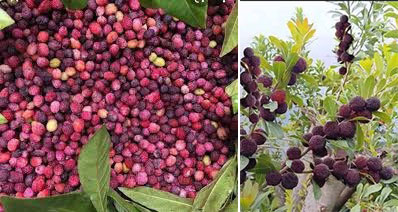
Kaafal (also spelled Kaphal or Kafal) is a small, wild berry native to the middle Himalayan region, widely celebrated as the official state fruit of Uttarakhand. It is a prized summer delicacy for locals and tourists alike, appearing briefly between April and June.
1. Appearance and Taste
Fruit Structure: Kaafal is a small, succulent drupe, roughly the size of a cherry (1–2 cm in diameter). It has a thin, fleshy exterior covering a relatively large, hard stone core (seed).
Colour: The berries turn from green to a vibrant red when ripe, and eventually a deep purplish-black at peak maturity.
Flavor Profile: It is famous for its refreshing sweet-tangy or sweet-sour taste. Locals typically enjoy it fresh, often seasoned with a sprinkle of rock salt and chili powder.
2. Botanical and Geographical Details
Scientific Name: Myrica esculenta; it is also known as the Box Myrtle or Bayberry.
Habitat: It grows wild in temperate forests at elevations between 1,000 and 2,200 metres. You’ll find it most commonly in the Nainital, Almora, and Ranikhet districts of Uttarakhand.
Short Shelf Life: One of its most defining traits is its fragility; once picked, the fruit typically lasts only 2–3 days, which is why it is rarely seen in markets outside the Himalayan region.
3. Medicinal and Health Benefits
In traditional Ayurveda, almost every part of the Kaafal tree is used for therapeutic purposes:
Bark: Used to treat asthma, fever, cough, and allergies. It is also chewed to relieve toothaches.
Fruit: Rich in antioxidants, Vitamin C, iron, and potassium. It is believed to aid digestion and boost immunity.
Modern Uses: Beyond eating fresh, it is processed into juices, squashes, syrups, and jams.
4. Folklore: "Kafal Pako, Main Ni Chakhyo"
Kaafal is deeply ingrained in the local culture and immortalised in the famous Kumaoni song Bedu Pako Baramasa. A haunting local legend tells of a young girl who was wrongly accused by her mother of eating the berries. After the girl's tragic death, she is said to have turned into a bird (the Cuckoo or Magpie) that flies through the forests in summer singing, "Kafal pako, main ni chakhyo" ("The kafals have ripened, but I haven't tasted them").
काफल खाने के फायदे | Kafal Fruit Benefits In ...
Kafal Pako Min Ni Chakho- Sorrowful Story related to Kafal